
MamaZen: Mindful Parenting App
Motherhood, Parenting & Family Wellness InstituteParenting
3.871.00 Reviews
- Version
- 1.44.11
- Installs
- 10.00K
- Age Rating
- Everyone
Screenshots


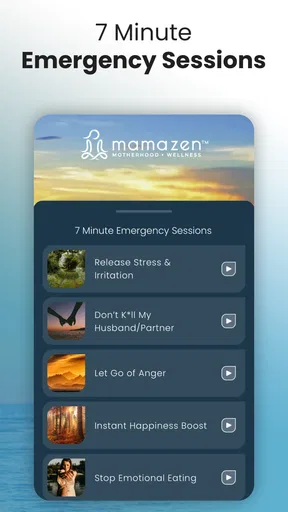
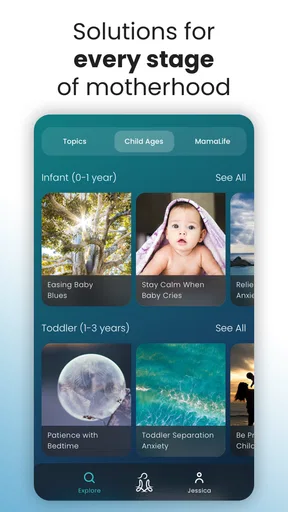
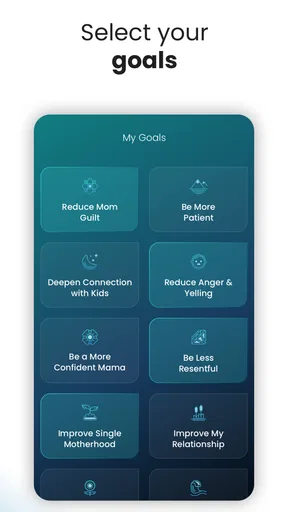
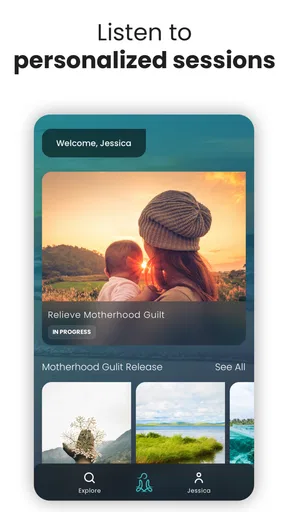

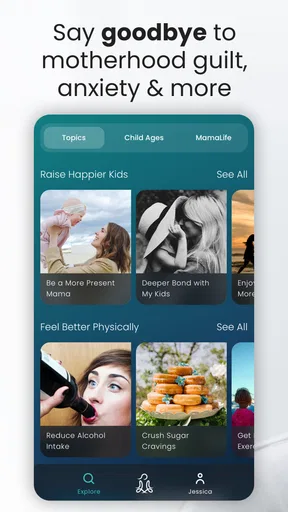
Our Review of MamaZen: Mindful Parenting App
 Analysis by Appyee
Parenting advice is easiest to appreciate when I need it in the middle of a difficult day, not when I am calmly browsing an app store. That is the situation in which I approached MamaZen: Mindful Parenting App, a free parenting app from Motherhood, Parenting & Family Wellness Institute. Its focus is positive parenting and the emotional side of raising healthy, happy children, so I treated it less like a reference book and more like a practical companion for moments when my patience was running low.
My overall impression is that MamaZen is most useful when I use it before a familiar family problem becomes a full argument. It encourages a pause, a change in perspective, and a more deliberate response. That sounds simple, but the timing matters. An app cannot remove a toddler’s meltdown, a rushed morning, or the exhaustion after a poor night’s sleep. What it can do is give me a small, repeatable process for noticing my own reaction and choosing what to do next.
From a tense moment to a calmer parenting response
I find it helpful to treat a tense exchange as a cue to pause, not as proof that I have failed. A brief reset can help me notice whether I need to hold a boundary, change how I explain it, or return to the conversation once everyone is calmer. That practical distinction leads into the next section: choosing a starting point that fits the family problem in front of me.
Starting with the real problem, not an idealized family routine
The strongest way to approach MamaZen is to begin with one recurring situation. I would not open it expecting a complete parenting course that solves every age, temperament, or family dynamic. Instead, I would pick something concrete: shouting during homework, repeated bedtime resistance, sibling conflict, or the moment when a child ignores the same request for the fifth time.
That narrow starting point makes the app’s positive-parenting approach easier to apply. Rather than asking me to become endlessly calm, it directs attention toward the interaction itself. What happened immediately before the conflict? What was I feeling? Was I trying to correct behavior, gain cooperation, or simply get through an overloaded schedule? These questions are valuable because they move the focus away from labeling a child as difficult and toward understanding the pattern.
In everyday use, I found that this kind of reflection works best when I am honest about my own starting condition. If I am hungry, late, overstimulated, or already irritated by several small problems, a child’s refusal can feel much bigger than it really is. Recognizing that does not excuse unsafe or hurtful behavior, but it does help me choose a response that is less likely to escalate the situation.
The app belongs to the parenting and family wellness space, and that distinction matters. It is not a medical diagnostic tool, a replacement for professional support, or a live emergency service. I see its role as everyday guidance for parents who want to build better habits around communication, boundaries, and emotional regulation.
How I would use the app step by step
My practical workflow begins with opening the app when I have enough privacy to pay attention, even if that is only a few minutes. I would choose a topic that matches the situation rather than consuming advice randomly. A parent dealing with bedtime resistance needs a different starting point from a parent who is losing patience during morning preparation, even though both problems may involve similar emotions.
Next, I would work through the guidance with one question in mind: what can I change in my next interaction? That question keeps the experience grounded. It is tempting to collect parenting advice without changing anything, but the useful handoff is from a calm moment inside the app to a specific action outside it. For example, I might decide to give one clear instruction instead of several at once, acknowledge the child’s frustration before repeating a limit, or take a short pause before speaking.
A helpful technique is to use MamaZen before the predictable trigger, not only afterward. If bedtime causes conflict every evening, I would spend time with the relevant guidance earlier in the day and choose one response to practice. This turns the app into preparation rather than emotional cleanup. It also gives me a fairer test of the advice because I am not trying to learn while a child is already crying.
After the interaction, I would return briefly and consider what changed. Did the child cooperate more quickly? Did the disagreement last just as long but feel less hostile? Did I stay consistent with the boundary? These are better measures than expecting instant harmony. Positive parenting is often visible first in the adult’s behavior: fewer threats, less repetition, and a quicker recovery after tension.
The important handoff between advice and family life
The app’s real challenge is the handoff from screen to household. Advice can feel clear while I am reading it, yet become difficult when a child is shouting or refusing to move. I found it useful to reduce each session to one sentence I could remember. A long explanation is unlikely to survive a stressful morning, while a simple intention such as “stay firm without adding anger” is easier to carry into the next exchange.
This is also where the app can support a parent who has different approaches from a partner or another caregiver. One person can use the guidance to identify a calmer response, then explain the practical takeaway rather than forwarding a whole lesson. That conversation may prevent adults from giving conflicting instructions. The app does not need to become a shared family project to be useful; sometimes one caregiver changing their part of the interaction is enough to alter the tone.
There is a second handoff that deserves attention: from emotional insight to a realistic household boundary. Mindful parenting should not mean allowing every behavior or avoiding consequences. I would use MamaZen alongside clear rules. A child can be upset and still need to stop hitting, leave a dangerous area, or follow a necessary routine. The value is in separating the limit from the anger used to enforce it.
For that reason, I would be cautious about applying any advice mechanically. A strategy that works with a verbal preschooler may need to be simplified for a younger child, while an older child may respond better to a conversation about responsibility. The app can prompt a better mindset, but I still have to adapt the wording, timing, and boundary to my child.
A realistic evening example
Imagine a parent arriving at bedtime already tired. The child keeps leaving the bedroom, asks for another drink, and becomes upset when the answer is no. My old reaction might be to repeat the instruction more loudly, add a threat, and then feel guilty afterward. In a MamaZen-style workflow, I would prepare before bedtime by choosing one calm response and deciding what I will consistently do after the limit is stated.
When the child asks for another delay, I can acknowledge the feeling without reopening the negotiation: “You want more time, and bedtime is still now.” I can then follow through with the routine instead of adding a lecture. If I feel my voice rising, the useful step is not to pretend I am calm; it is to pause long enough to avoid turning frustration into another problem.
The outcome may still include tears. That does not automatically mean the approach failed. A child can dislike a boundary while the parent handles it respectfully. For me, the more meaningful result would be avoiding a long power struggle and recovering more quickly afterward. I could then review the situation and ask whether the routine itself needs adjustment, rather than blaming either the child or myself for every difficult night.
This example shows why the app is better suited to habit-building than instant crisis intervention. It helps me prepare a response, notice my emotional state, and evaluate the interaction afterward. It does not take over the parenting decision, and it should not be treated as a substitute for immediate help when there is danger, abuse, or a serious mental-health concern.
What the app does well for everyday parents
MamaZen’s main strength is its emphasis on the parent’s internal state without turning parenting into a self-improvement competition. I appreciate that distinction. Many parents already feel judged, and advice that implies perfect calm can create more shame. A more useful approach is to recognize that I will sometimes react badly, then give me a way to repair, practice, and try again.
It is also approachable for parents who do not want dense theory. The store presents it as a solution-oriented app for positive parenting, and in practice I would recommend it to someone who wants guidance that connects directly to family interactions. The Everyone age rating reflects that it is suitable for a broad audience, although the people who will benefit most are adults actively caring for children rather than children using it independently.
The free entry point makes it easy to test whether this style of support fits my needs. That matters because parenting tools are personal. Some people prefer a book they can annotate, a therapist who can respond to their history, or a short audio exercise they can use without reading. I would try the free experience first and pay attention to whether the guidance changes what I do, not merely whether it sounds reassuring.
The app has an average rating of 3.8 from around 236 ratings, with roughly 71 written reviews. I read that as a sign to keep expectations measured: there is enough user activity to suggest genuine interest, but not a reason to assume it will suit every family. The app has passed 10K installs, which gives it a modest footprint compared with the biggest parenting platforms.
Where MamaZen fits among the usual alternatives
Compared with a parenting book, MamaZen is easier to consult when I want a focused prompt rather than a long chapter. A book is often better for building a complete framework and returning to detailed explanations, while an app is more convenient for short sessions and repeated reminders of a chosen approach. If I already know that I learn best by reading deeply, the book may remain the stronger primary resource.
Compared with social-media parenting advice, I prefer the more deliberate format here. Social feeds can offer useful personal experiences, but they also mix conflicting opinions, dramatic examples, and advice that may not fit my child. MamaZen gives me a calmer place to reflect. The trade-off is that it may feel less lively and less interactive than a community where parents can immediately compare experiences.
Compared with professional counseling, the app is obviously more accessible for everyday reflection, but it is far less tailored. A therapist can notice patterns I might miss, ask follow-up questions, and help with issues such as trauma, depression, anxiety, or family conflict. I would choose professional support when my reactions feel uncontrollable, when conflict is persistent and severe, or when a child’s safety is involved. MamaZen can sit beside that support, not replace it.
It also differs from a basic habit tracker. Tracking whether I completed a task can be useful, but parenting problems are rarely solved by checking boxes alone. The more meaningful workflow here is emotional: identify a trigger, choose a response, try it in context, and reflect on the result. Parents who want schedules, feeding logs, developmental records, or shared calendars should look for a dedicated family organizer instead.
Practical details that affect the decision
The app is free to download, with in-app purchases ranging from $9.99 to $49.99 per item. That pricing structure is important because the free starting point does not necessarily mean every part of the experience is free. I would explore the available material before committing to a purchase and ask whether I am returning often enough to justify it.
It was released on September 4, 2020, and the current version is 1.44.11. It requires Android 6.0 or later, so people using very old Android devices should check compatibility before planning around it. Those details do not determine the quality of the parenting guidance, but they do affect whether the app fits a particular phone and how comfortable I am relying on it as a regular tool.
The developer is Motherhood, Parenting & Family Wellness Institute, which aligns closely with the app’s subject. Still, I would judge the experience by how clearly it helps me act. A credible-sounding name is not a substitute for advice that feels understandable, respectful, and appropriate to my household.
Where the workflow breaks down
The biggest weakness is timing. When a child is already in a full meltdown, I may not have the attention or emotional space to open an app, find the right topic, and absorb guidance. This makes preparation essential, but preparation is exactly what busy parents often struggle to maintain. If I forget to use it until after the argument, the app may help me reflect, yet it cannot undo the moment.
Another limitation is personalization. Parenting advice can be sensitive to age, neurodivergence, language development, sleep, family structure, and cultural expectations. A general positive-parenting suggestion may be sensible but still need substantial adaptation. I would be wary of any recommendation that seems to assume every child can respond to the same explanation or every parent has the same amount of time and support.
There is also a risk of turning mindful parenting into another obligation. If I treat every difficult interaction as a test that I must pass, the app could increase guilt rather than reduce it. I get more value when I use it as a gentle reset: one situation, one adjustment, and a willingness to repair when I fall short.
Parents seeking live conversation, detailed developmental information, emergency guidance, or a shared dashboard for multiple caregivers may find a different service more suitable. I would also skip MamaZen if I wanted entertainment, child-directed games, or a comprehensive record-keeping system. Its purpose is narrower and more reflective.
My final recommendation
I recommend MamaZen to parents who want practical support for changing the tone of everyday interactions and who are willing to practice outside the app. Its best result is not a perfectly quiet home. It is a parent who notices the trigger sooner, sets a boundary without unnecessary anger, and can return to connection after a difficult exchange.
I would begin with the free version, choose one recurring family situation, and use the guidance before the next predictable trigger. Afterward, I would judge it by a concrete question: did it help me respond differently in real life? If the answer is yes, the paid material may be worth considering; if the answer is no, a book, parenting group, or professional conversation could be a better investment.
In my view, MamaZen: Mindful Parenting App works best as a small pause between a child’s behavior and my reaction. That pause is not a magic solution, but it can be enough to replace automatic shouting with a clearer limit, a calmer voice, and a more useful next step. The real benefit is the repeatable handoff from reflection to action, provided I remember that an app can support parenting without ever taking the parent’s place.
Verdict
Strengths of MamaZen: Mindful Parenting App
- Short mindfulness sessions fit easily into busy parenting routines.
- Guided exercises address stress, anger, guilt, and emotional overwhelm.
- Practical parenting tools encourage calmer responses during difficult moments.
- Content is designed specifically around everyday challenges of raising children.
- Progress can be made privately without attending classes or appointments.
Limitations of MamaZen: Mindful Parenting App
- Most content may require a paid subscription after the trial period.
- The app may feel less useful for parents seeking clinical mental-health care.
- Some exercises require consistent practice before benefits become noticeable.
- Limited value if you prefer live coaching or personalized professional guidance.
- Subscription terms and available content may vary by region or platform.
Similar Picks in This Category
View All
Family Space
Motorola Mobility LLC.3.9

شرطة الأطفال - مكالمة وهمية
Oub Apps4.1

Findmykids: Parental Control
LETEM LTD4.6

Pregnancy + | Tracker App
Philips Electronics UK Limited4.8

Policía de niños - para padres
Kids police4.7

Pregnancy App
Amila4.9
Frequently Asked Questions
What is MamaZen: Mindful Parenting App, and who is it designed for?
MamaZen is a mindfulness and emotional-wellness app created primarily for mothers and parents who want practical support during stressful moments. It offers guided meditations, relaxation exercises, mindset practices, and parenting-focused audio sessions intended to help users manage overwhelm, anger, anxiety, guilt, and everyday family pressure. It can be useful for beginners, although it is not a replacement for professional mental-health care.
What kind of content and exercises are available in MamaZen?
The app generally focuses on short, accessible sessions that can fit into a busy parenting routine. Depending on the available program and subscription, users may find guided meditations, breathing exercises, visualizations, sleep-related relaxation, and lessons addressing emotional triggers and parenting challenges. The content is designed to be easy to follow, so users do not need previous meditation experience or special equipment to begin.
Can MamaZen help with parenting stress, anger, or anxiety?
MamaZen may help users become more aware of their emotional reactions and practice calming techniques before responding to difficult situations. Its guided sessions can support relaxation, self-compassion, and more mindful communication, which may be valuable when parenting feels overwhelming. However, results vary from person to person, and the app should not be considered a treatment for severe anxiety, depression, trauma, or other mental-health conditions.
Is MamaZen free to download, and does it require a subscription?
MamaZen may be available to download at no initial cost, but access to many or all of its guided programs can require a paid subscription or in-app purchase. The exact price, trial period, renewal terms, and available plans may differ between Android and iOS and can change over time. Before confirming a trial or subscription, review the store listing and cancellation conditions carefully.
Can I use MamaZen offline, and is my personal information private?
Offline availability depends on the app version and whether specific audio sessions can be downloaded for later use. Users should check the download options inside the app rather than assuming every feature works without an internet connection. Because mindfulness apps may collect account, usage, or payment information, prospective users should also read MamaZen’s current privacy policy and app-store disclosures before creating an account or subscribing.
